
Meteosat Third Generation
MTG - one of the most innovative geostationary meteorological satellite systems ever built.

Meet Gareth Williams, one of many behind the Meteosat Third Generation mission


“It happened to be that ESTEC didn’t have enough candidates for their trainee programme. Not only was I invited for interview, I ended up being selected for one of the positions and worked at ESTEC for a year and a half. I’ve worked for different companies and space agencies ever since,” he said.
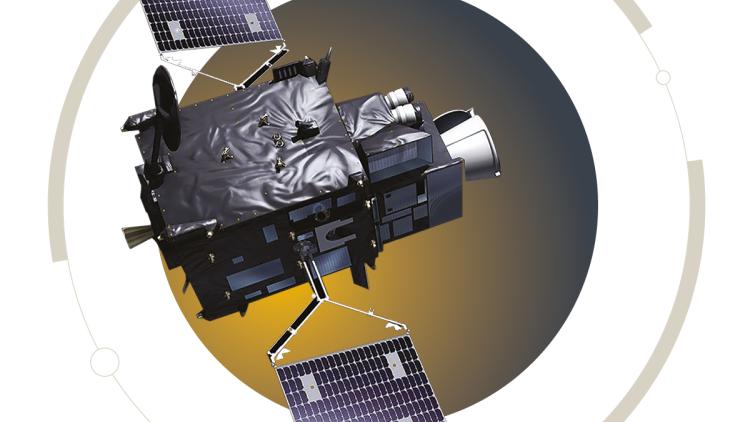
Now, Williams is putting his more than 30 years’ experience to good use with the first Meteosat Third Generation satellite, MTG-I1, now operational and the second, Meteosat Third Generation Sounder 1, MTG-S1, undergoing in-orbit testing in preparation for the start of services to users. In parallel, preparations are underway for the launch of Meteosat Third Generation Imager 2, MTG-I2, the third MTG satellite, which will complete the constellation.
As Head of the Flight Operations Division, he is responsible for ensuring the satellites, once safely in orbit, gather scientific data for subsequent use by weather forecasters and climate agencies in order to improve short- and long-range weather forecasts.
To do this, Williams oversees several teams that are expert in a variety of areas: operating the satellites and their payload instruments, writing and testing detailed and complex procedures, ensuring the satellites stay in their optimal position by executing manoeuvres, and managing the complex systems to maintain contact between the satellites and the ground. In addition, he oversees the controllers who maintain watch over the satellites and ground systems 24 hours a day, every day of the year.
“The key thing with MTG is that this is a completely different design of spacecraft from its predecessors, so we have had to learn how to continue our successful run operating previous generations of Meteosat with these revolutionary new satellites,” Williams said. “It works in a completely different way from what came before and brings greatly expanded capabilities, as well as a few new constraints.”
One aspect of this new design has to do with how the satellites move through the Earth’s uneven gravitational field and capture their data. The MSG satellites spin at 100 revolutions per minute, or more than once per second. This makes it easier to keep the satellites stable in orbit but imposed significant limits on the design of the satellites and their instruments.
In contrast, MTG controls its position and orientation using thrusters. Although the absence of spin makes controlling the satellites’ temperature – essential for the satellites’ sensitive electronics – more complicated, it provides greater freedom in designing the payload instruments. MTG is also more autonomous than MSG, with an improved ability to perform its mission with less intervention from ground controllers.
With two successful MTG launches behind him, Williams anticipates mixed emotions as the launch of the third satellite, MTG-I2, approaches.
“I’ll feel relief that it is safely in orbit, together with the realisation that the few months following the launch are going to be a lot of hard work across EUMETSAT. But the whole point of being here is to achieve difficult things,” he said.
“People here at EUMETSAT genuinely care about what we do because we recognise its importance. Doing our job properly results in more accurate weather forecasts that benefit people’s lives in many ways: knowing when to pack a raincoat, predicting winter snows so roads can be salted, helping farmers plan their harvest, aiding civil infrastructure planning, and even saving lives by the early detection of severe storms.
“We also play an important role in the global fight against climate change by gathering information about the environment – anything from temperature data from Antarctic ice floes to the path of an ocean mammal as it moves around the world.
“If we don’t change things, and we don’t realise how much things are already changing, our grandchildren and great-grandchildren are going to have a very different life to the one we’d wish for them to have.”
Sarah Puschmann