Spotlight on an instrument: Copernicus Sentinel-5
Mission on the new Metop Second Generation A satellite will support air quality monitoring and climate applications
EUMETSAT’s Dominika Leskow-Czyżewska, Atmospheric Composition Applications Expert, highlights how Copernicus Sentinel-5 observations will make a difference for monitoring the ozone hole, nitrogen dioxide, and smoke from wildfires.
Ozone hole monitoring
In 1985, a group of scientists from the British Antarctic Survey shared their discovery of a hole in the ozone layer above Antarctica. Located 15-30km above the Earth’s surface, the stratospheric ozone layer absorbs harmful ultraviolet radiation from the sun. Human-made chemicals including those found in refrigerants and industrial solvents were degrading in the stratosphere, breaking down the ozone layer. The world took action and in 1989, the Montreal Protocol, a treaty limiting the production and consumption of ozone-depleting chemicals, entered into force.
Thanks to this and other actions, the ozone hole has been shrinking. But the problem persists. A few years ago, it was found that some unregulated greenhouse gas emissions have been responsible for slowing down the recovery of the ozone layer. Currently, each spring in the Southern Hemisphere, the amount of ozone in the ozone layer can plummet to less than half the value in winter, underscoring the importance of continued monitoring.
Credit: Copernicus Atmosphere Monitoring Service / ECMWF (2025)
Copernicus Sentinel-5 will collect two types of ozone measurements: total ozone column – the number of ozone molecules in a vertical swath spanning from the satellite to the ground – as well as ozone profiles – the number of ozone molecules in discrete sections of the column.
“Observations from Sentinel-5 will complement those from the Infrared Atmospheric Sounding Interferometer - New Generation (IASI-NG) by providing even better information about various gases at different heights in the atmosphere,” said Leskow-Czyżewska.
“This synergy will be particularly useful for measuring ozone, with Sentinel-5 being more sensitive close to the ground and IASI-NG more sensitive higher in the atmosphere.
“A major benefit of the Sentinel-5 mission is that it will be on the Metop Second Generation A platform together with other atmosphere-monitoring instruments. The synergy Sentinel-5 will have with those other instruments will be like a superpower.”
Capturing changes in nitrogen dioxide
Air pollution is a global problem, with devastating consequences for many. The World Health Organization estimates that in 2019, outdoor air pollution caused 4.2 million premature deaths worldwide. In an attempt to guide policymakers to implement legislation for cleaner air, the WHO identified nitrogen dioxide as a key pollutant that needs to be capped. Formed during the combustion of fossil fuels, nitrogen dioxide is one of the pollutants Copernicus Sentinel-5 will monitor, providing crucial observations that will complement those from other instruments.
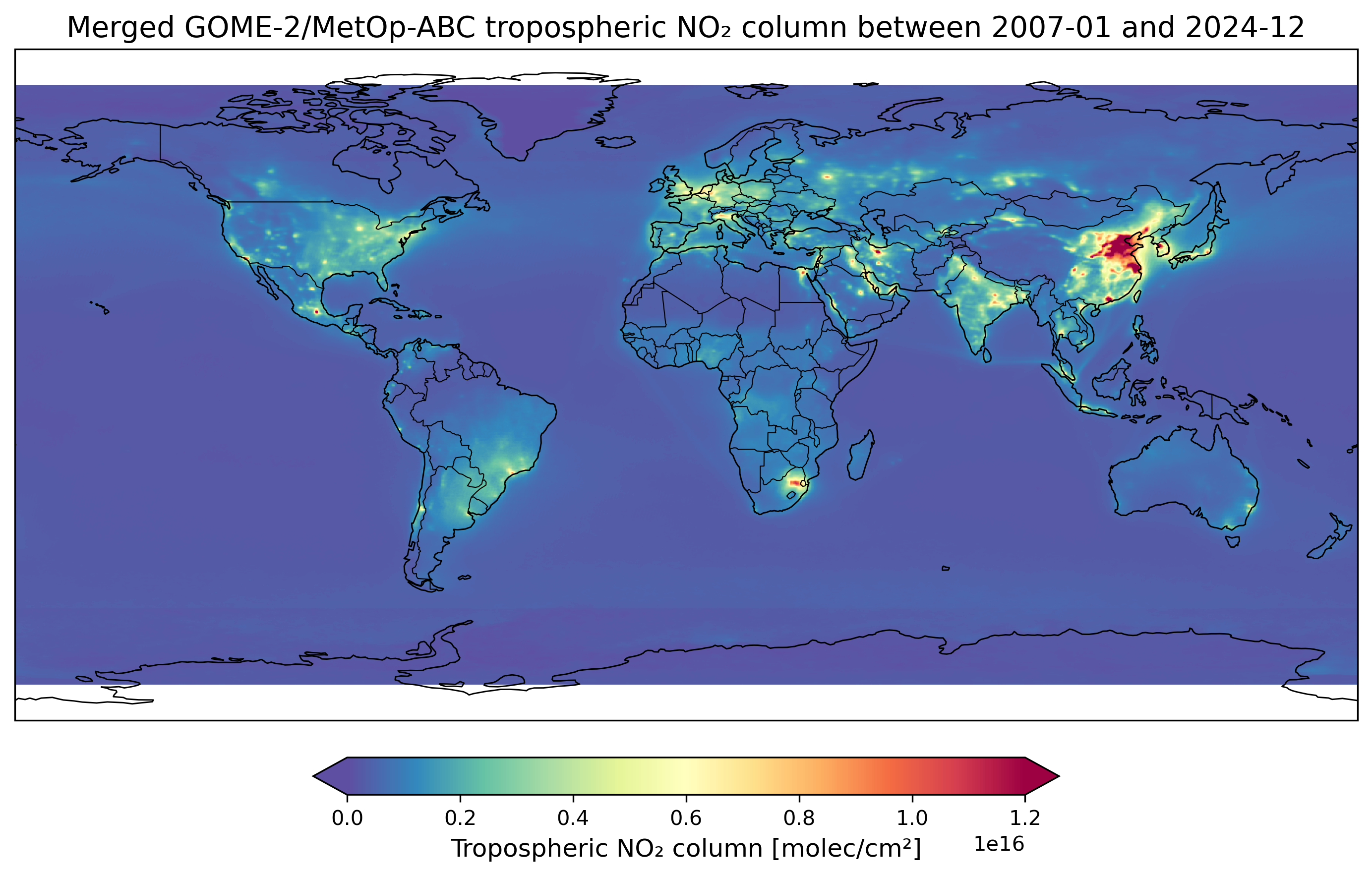
Credit: DLR/AC SAF/EUMETSAT
“Nitrogen dioxide is a very dynamic gas,” said Leskow-Czyżewska. “The Sentinel-5 Precursor satellite carrying TROPOMI passes over Europe at a fixed time – always in the early afternoon – so changes in air quality during the day are missed. The Sentinel-4 mission will make it possible to see nitrogen dioxide every hour from geostationary orbit, which will complement TROPOMI observations in Europe, while Sentinel-5 observations will be a very helpful addition to the TROPOMI observations globally.
“Both the Sentinel 5-Precursor satellite and Sentinel-5 are polar-orbiting. Sentinel-5 will pass over Europe mid-morning, so rather than just getting nitrogen dioxide measurements once a day from TROPOMI, we will get them at an additional time from Sentinel-5. This will be especially beneficial for monitoring the fluctuations in nitrogen dioxide as a result of changes in traffic patterns.
“I could easily imagine that TROPOMI, which measures nitrogen dioxide in Europe around 1pm, is not measuring during the peak of traffic in European cities. Mid-morning measurements from Sentinel-5, closer to the morning rush hour, will likely show a more accurate view of traffic pollution in Europe than we are currently able to see.”
Where there’s smoke
The Canadian wildfires that broke out in May 2025 were the second-worst on record in terms of hectares of land burned. A staggering 7.3 million hectares burned, an area equal to nearly the entire country of Panama, with more than 33,000 people being forced to evacuate. The blazes emitted enormous plumes of smoke that traversed the Atlantic Ocean, reaching Europe in early June.
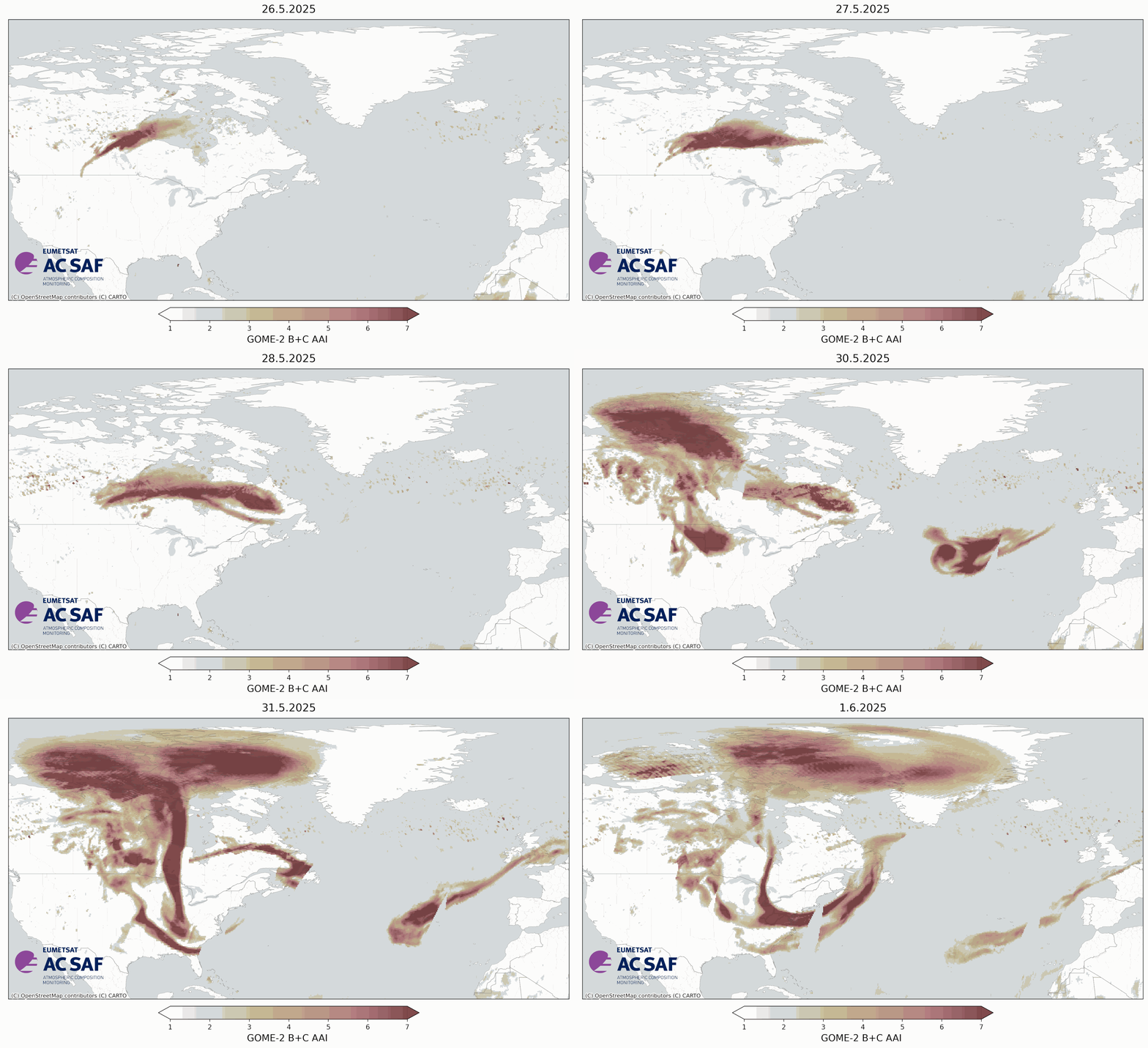
Credit: Anu-Maija Sundström, AC SAF
Sentinel-5 will continue on with the important measurements of aerosols – tiny particles including those from smoke, dust, and ash – currently made by the Global Ozone Monitoring Experiment-2 on board the first generation of Metop satellites.
“With Sentinel-5, we will be able to see not only huge plumes like the ones in the 2025 Canadian wildfires, but also the fine details of those plumes,” said Leskow-Czyżewska.
“In addition, the mission will enable the people who use the data to track aerosols even better by providing observations once a day over Europe that will complement the daily Global Ozone Monitoring Experiment-2.
“Especially important is that Sentinel-5 will provide continuity in the climate data records because Sentinel-5 will operate after the first two of the first generation Metop satellites reach the end of their lifetimes, which has already happened for the first one, Metop-A. The Sentinel-5 instrument on board the second generation Metop satellites will continue to deliver data for a long time -- until almost 2050. These aerosol measurements will make it possible to do long-term analysis of atmospheric composition.
“We need to continue to monitor atmospheric composition because this is an important step towards taking action to cut down emissions, enabling us to live healthier, longer lives with cleaner air and with less greenhouse gas emissions.”
This article highlights three of the many features Copernicus Sentinel-5 will monitor. In addition, Sentinel-5 will observe sulphur dioxide from erupting volcanos, carbon monoxide from wildfires, methane produced by polluters, and much more.
Author:
Sarah Puschmann