Tracking air quality from space with EUMETSAT and Copernicus
The role of EUMETSAT data in the Copernicus programme’s efforts to monitor air quality and atmospheric composition
The Copernicus Atmosphere Monitoring Service’s Dr Laurence Rouil highlights how EUMETSAT data impact air quality forecasting systems, enable countries to provide information about air pollution episodes, accurately report their emissions, and more.
10 February 2026
10 February 2026
In October 2024, the European Parliament and Council of the European Union issued an updated directive on ambient air quality and cleaner air for Europe. Despite improvements in recent decades, air pollution remains Europe’s largest environmental health risk, causing more than 1,200 premature deaths in people under 18 years of age annually in European Environment Agency member and collaborating countries. The new legislative act highlights that resources from the Copernicus Atmosphere Monitoring Service (CAMS) are a useful source of information for EU member states to monitor air quality.
Dr Laurence Rouil, Director of CAMS at the European Centre for Medium-Range Weather Forecasts, which implements the service for the European Commission, sees this mention as a big win for the impact of Earth observation data on cleaner air.
“I've been very keen on promoting the added value of CAMS and Earth observation for over ten years, including in my previous position working for the Ministry of the Environment in France,” she said. “I am quite confident that CAMS can bring a lot to EU member states, who have to report on air pollution levels, air pollutants concentrations, as well as emissions.
“At CAMS, our activities relate to the implementation of systems that allow people to understand, forecast, and analyse the evolution of atmospheric composition. When we talk about atmospheric composition, we are talking about chemical compounds present in the atmosphere, including greenhouse gases that have an impact on climate change. These can be caused by human activities as well as by natural events.”
CAMS relies on a number of instruments, both satellite and ground-based, to provide valuable information on atmospheric composition and air quality. EUMETSAT data play a key role in a range of CAMS applications from monitoring wildfires to greenhouse gases such as methane and carbon dioxide.
Towards cleaner air
Rouil is looking forward to when CAMS will be able to begin assimilating observations from two next-generation air quality and atmospheric composition missions: Copernicus Sentinel-4 and Copernicus Sentinel-5.
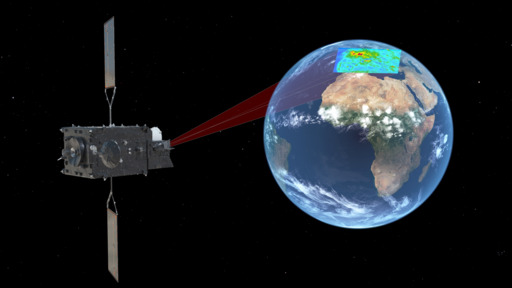
On board the Meteosat Third Generation Sounder 1, Europe’s first operational sounding satellite in geostationary orbit, Copernicus Sentinel-4 will measure aerosols – fine particles – as well as nitrogen dioxide, sulphur dioxide, and ozone. Copernicus Sentinel-5 will provide complementary observations from a low Earth orbit on board Metop Second Generation A1, measuring some of the same gases as Sentinel-4, as well as different ones, including methane and carbon monoxide.
“Earth observation data will be a game changer for air quality modelers in Europe,” said Rouil.
“I just had a conversation with the European Environment Agency and they asked me when Sentinel-4 and Sentinel-5 data will become available. They want to use the data and they want us at CAMS to help them use them.”
“My hope is that when we get these new data, we will update our air quality forecasting systems, but also policy tools. We will be able to talk about this new generation of data that will complement nicely the network of ground-based instruments we currently rely on.”
Monitoring emissions
CAMS also plans to assimilate observations from EUMETSAT satellites to expand its monitoring of the emission capacities of specific gases. Its Methane Hotspot Explorer – an interactive tool that makes it possible to identify worldwide sources of emissions of the harmful greenhouse gas – currently uses observations from the Tropospheric Monitoring Instrument on board the Copernicus Sentinel-5 Precursor satellite. When data from its successor, Sentinel-5, become available, Rouil expects these to contribute to this tool, as well.
Credit: ESA - S. Corvaja
“I hope that we will improve our methane monitoring system with Sentinel-5 data and also expand it with data about other air pollutants, like nitrogen dioxide,” said Rouil. “EU countries are required to report on their emissions of various pollutants, among which are nitrogen oxides, including nitrogen dioxide, but there are currently some uncertainties regarding these emissions. Earth observation will play a big role in improving the accuracy of monitoring and quantifying them.”
In addition, the Copernicus Anthropogenic Carbon Dioxide Monitoring (CO2M) mission will make it possible to better monitor sources of carbon dioxide and methane resulting from human activity, such as power plants. The first satellite in the series is planned for launch in 2027.
“We do not have so much data for monitoring carbon dioxide emissions today, so CO2M will be really crucial in the future,” said Rouil.
Small particles with a big impact
Aerosols are important to monitor because of their impact on human health and the climate. CAMS works to identify aerosols in the atmosphere and to determine if they come from natural sources, such as wildfires and erupting volcanoes, or human activity, such as the burning of fossil fuels or wood.
“A key activity for which EUMETSAT products are very helpful is the characterisation of aerosols in the atmosphere,” said Rouil. “We already use this information in our analysis of air pollution drivers, which are the factors that influence air pollution.”
She is looking forward to the contribution of aerosol data from the Multi-Viewing, Multi-Channel, Multi-Polarisation Imager (3MI) on board the recently launched Metop Second Generation A1 satellite.

“We are also getting ready to use Sentinel-3 data for aerosol monitoring and fire radiative power monitoring, to include them in the service dedicated to wildfire emissions monitoring,” said Rouil. “This is something that we have worked hard on with our colleagues from EUMETSAT. They have provided us with very good products that we are ready to assimilate in our system in an operational way this autumn.”
In the future, the many ways CAMS makes it possible to better monitor air quality and atmospheric composition are likely to continue to have a positive impact on improving understanding of the climate crisis and help to inform policies.
“We support the air quality and climate communities in terms of climate change mitigation through the reporting and verification of emissions,” said Rouil. “And we continue to support international agreements that invite countries to set ambitious greenhouse gases emission reduction objectives and to meet objectives, which are essential for our future.”
Author:
Sarah Puschmann