12 March 2026
05 October 2023
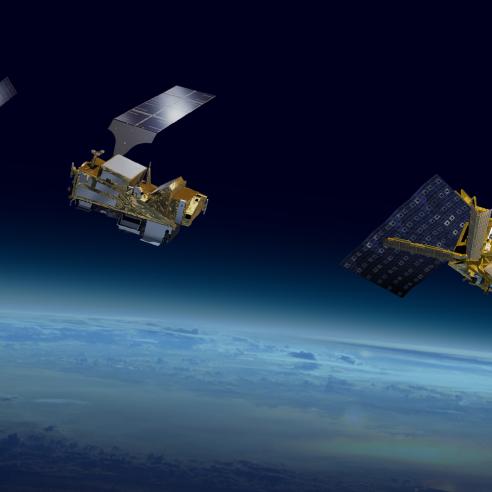
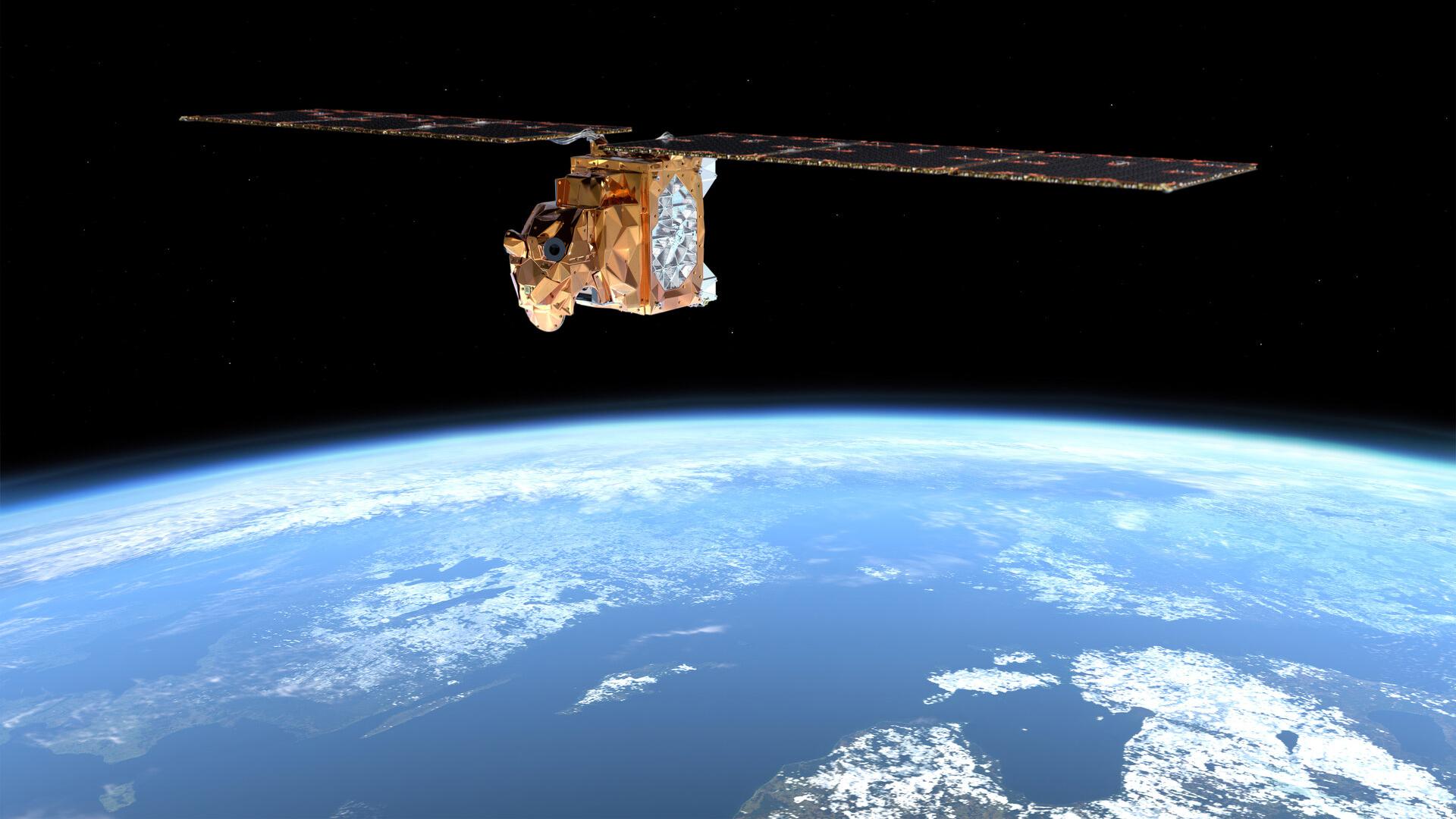
The EUMETSAT Polar System – Sterna (EPS-Sterna) is a new programme fully funded by EUMETSAT that will deploy a constellation of microsatellites. Each microsatellite will carry a state-of-the-art microwave sounder designed to deliver high-quality observational data in support of operational meteorology and climate monitoring.
The initial constellation is composed of six satellites in sun-synchronous polar orbits. In only five hours or less, the microwave sounders on these satellites will make observations covering 90% of the globe.
The microwave sounder will measure energy reflected off the Earth’s surface in the microwave range of frequencies. Because it makes measurements beyond the visible range, it can provide temperature and humidity observations even when it is overcast, raining, or snowing.
EPS-Sterna will significantly improve the accuracy of numerical weather prediction models by providing data globally with unprecedented coverage and revisit time. In addition, the mission will have a large impact over the poles, where geostationary satellites have little visibility and Metop polar-orbiting satellites need longer to achieve global coverage.


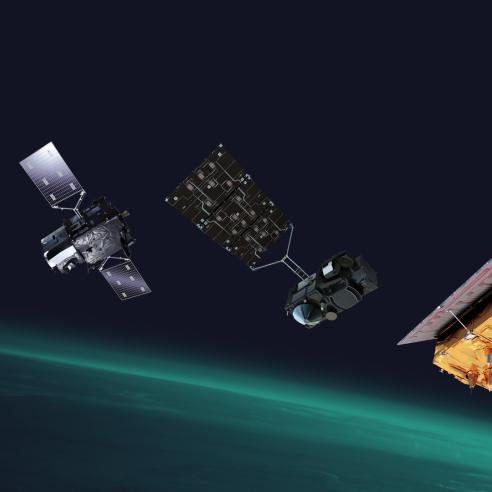
EPS-Sterna will orbit the Earth in a polar orbit, complementing the observations from satellites in the EUMETSAT Polar System – Second Generation (EPS-SG), the National Oceanic and Atmospheric Administration’s Joint Polar Satellite System (JPSS), and the Chinese FengYun-3 (FY-3) system.
The EPS-Sterna programme approval process was successfully completed on 21 January and it is currently in development.
Facts and Figures
- Altitude: 595km
- Mass in orbit: 135kg
- Payload mass: 30kg
- Design lifetime: 5 years
- Mission duration: 13 years
- Expected launch date of the first six satellites: 2029
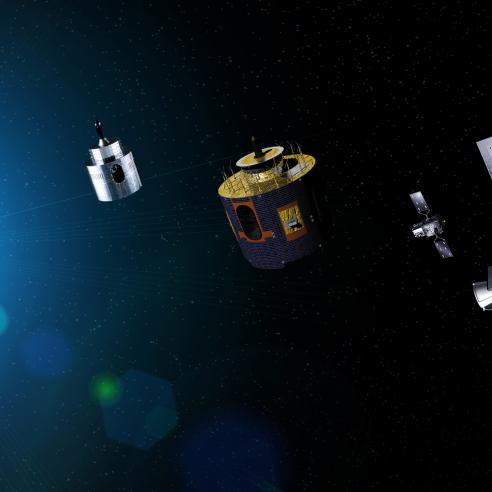
Main image:
Credit: ESA