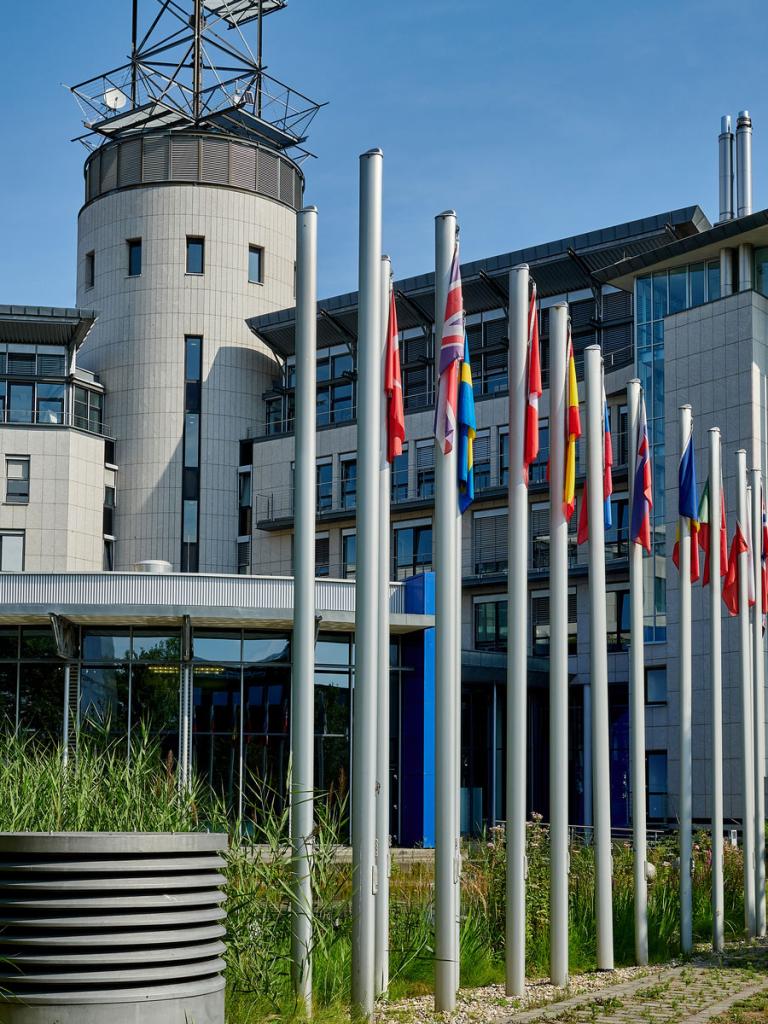
During the meeting, made of up representatives from EUMETSAT, the European Commission, project partners and selected stakeholders, participants will discuss data needs, data quality and validation, products dissemination and exploitation and user engagement.
Further discussion topics will be planned applications to be developed including AI, as well as the relation to other Copernicus services.
Through the Horizon Europe programme – the European Union’s main funding programme for research and innovation – researchers from the three projects receive support to improve the understanding of the Earth System and to develop tools and services that make use of EUMETSAT’s data and in turn help tackle some of today’s biggest social and environmental challenges.
Horizon Europe has a budget of €95.5 billion for 2021-2027. A portion of this budget supports environmental observation, including projects that aim to harness data from EUMETSAT’s and Copernicus new satellites. These projects aim to facilitate collaboration and strengthen the impact of research and innovation in efforts to foster digital solutions in support of the European Green Deal.
GreenEO
GreenEO aims to provide decision-makers with advanced tools to help better manage land use, track pollution, and protect biodiversity. Led by the Norwegian Institute for Air Research (NILU), the project will focus on four key areas: cities, farmlands, forests, and natural ecosystems. Specialists will integrate satellite data from EUMETSAT’s next-generation satellite programmes such as EPS-SG and MTG, with digital technologies, climate models, and machine learning.
PANORAMA
PANORAMA is led by the French National Centre for Scientific Research (CNRS) and the University of Lille and aims to enhance atmospheric monitoring by combining multi-sensor data from EUMETSAT’s next-generation satellites. The project aims to improve Earth observation tools to support climate action, improve warnings of natural disasters, and promote sustainable development.
CLEAR-EO
CLEAR-EO addresses climate change, extreme weather events, and air quality anomalies by advancing the use of next-generation Earth observation data and advanced analytics. By integrating new observations from Meteosat Third Generation (MTG) and the EUMETSAT Polar System Second Generation (EPS-SG), the project enhances the availability of high-resolution, timely environmental information to support decision-making.
The project focuses on three key application areas: flash flood monitoring in urban environments, climate adaptation in agriculture, and air quality assessment in cities. CLEAR-EO combines satellite data with digital technologies, cloud infrastructures, and on-demand processing workflows to improve monitoring, forecasting, and early warning capabilities.
A multidisciplinary partnership brings together research organisations, weather forecasting centres, Earth observation specialists, and cloud platform experts to develop, demonstrate, and promote innovative services.
Through its Virtual Observatory, CLEAR-EO connects diverse environmental data with real-world applications, enabling smart geospatial alerts and decision-ready outputs. The project also contributes to the early exploitation of new European weather satellite data and supports broader initiatives such as Destination Earth, the European Green Deal, and the Sustainable Development Goals.
Participation in this event is upon invitation only.