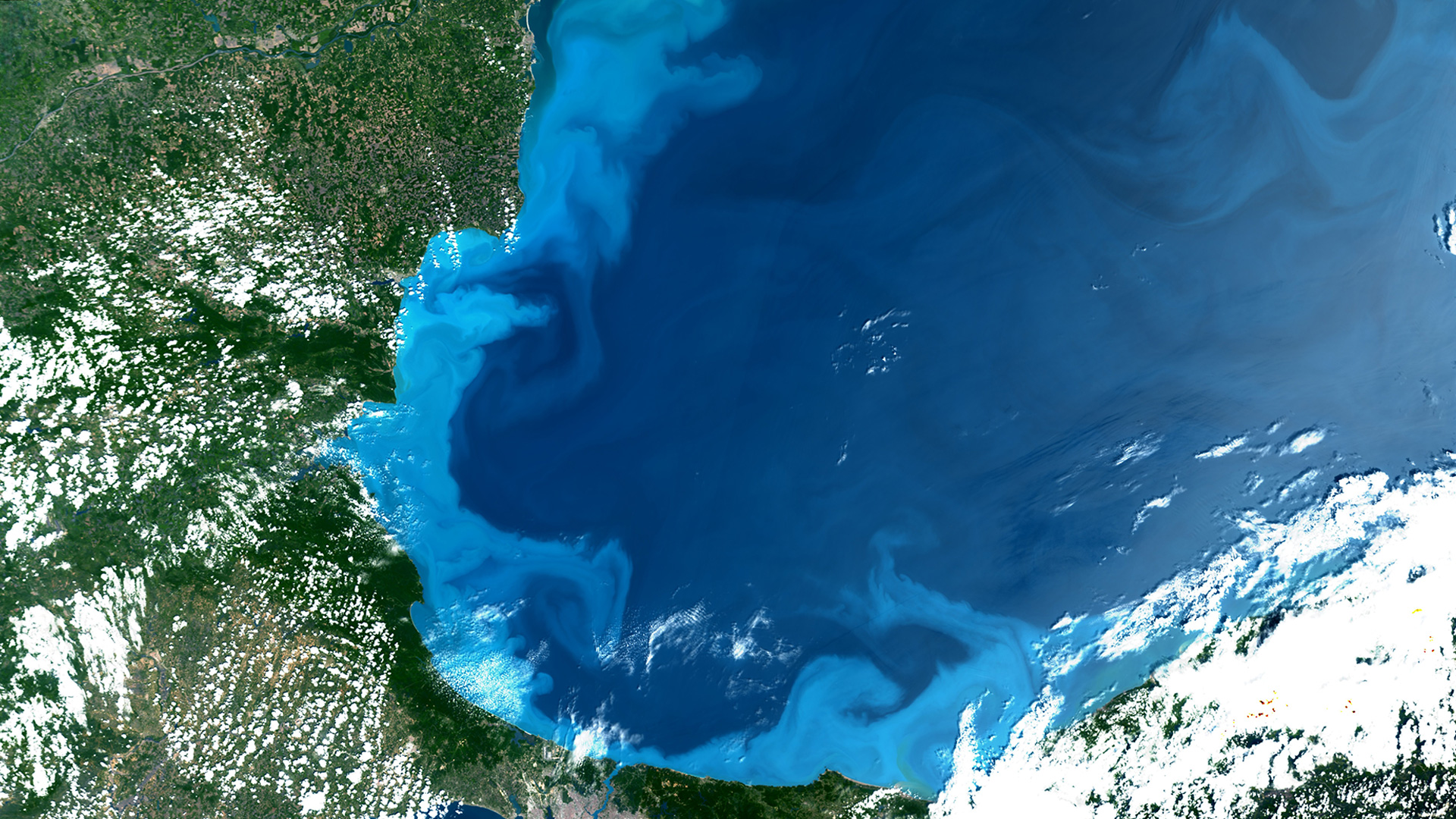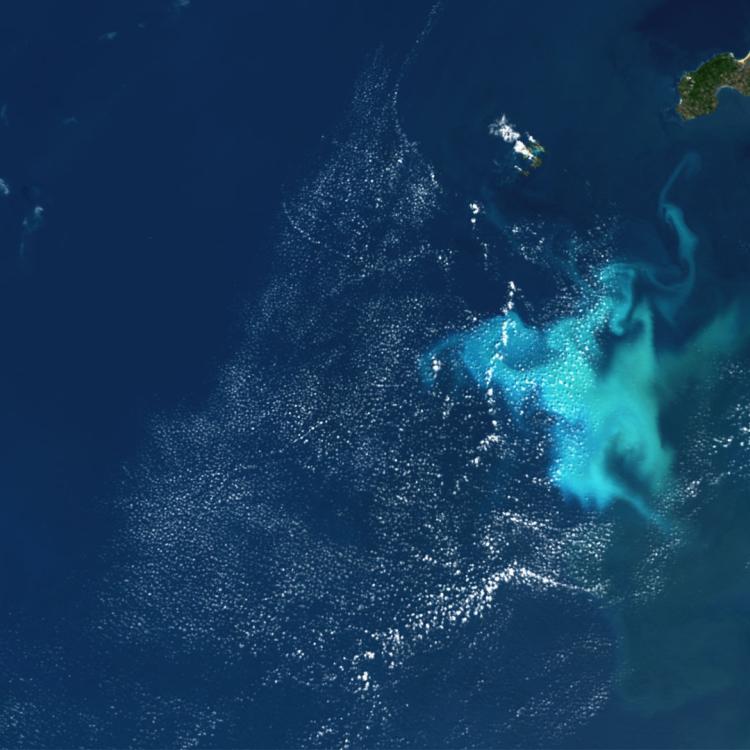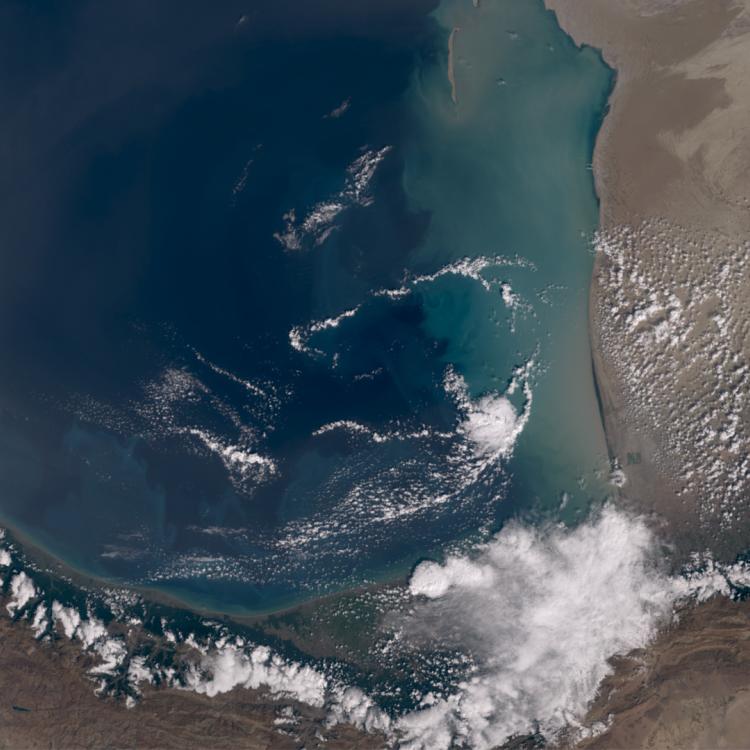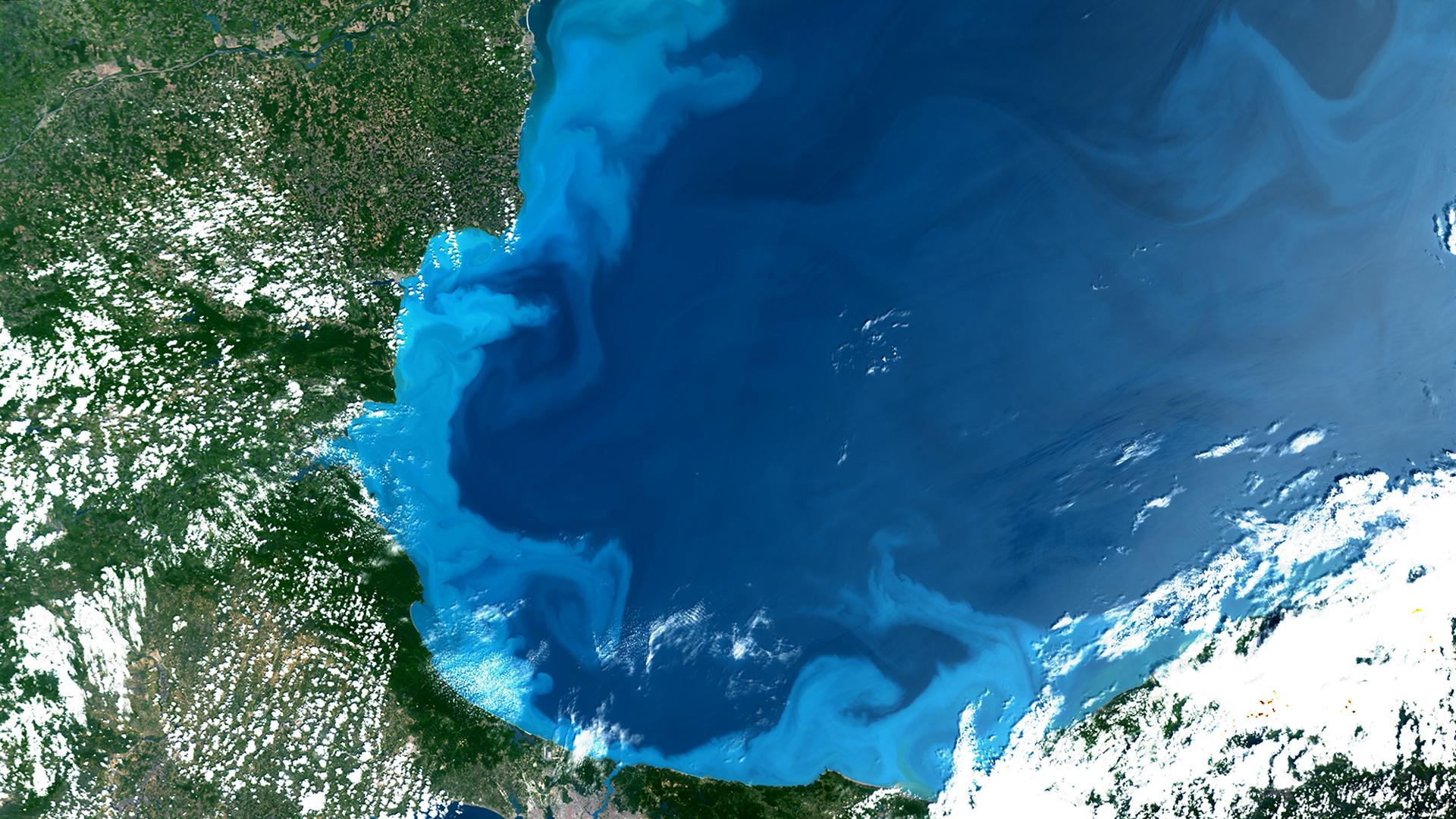
Marine algae bloom in the Black Sea, Sentinel-3, 25 May 2026

Image of the week: Marine algae bloom in the Black Sea


Watching our Earth from space
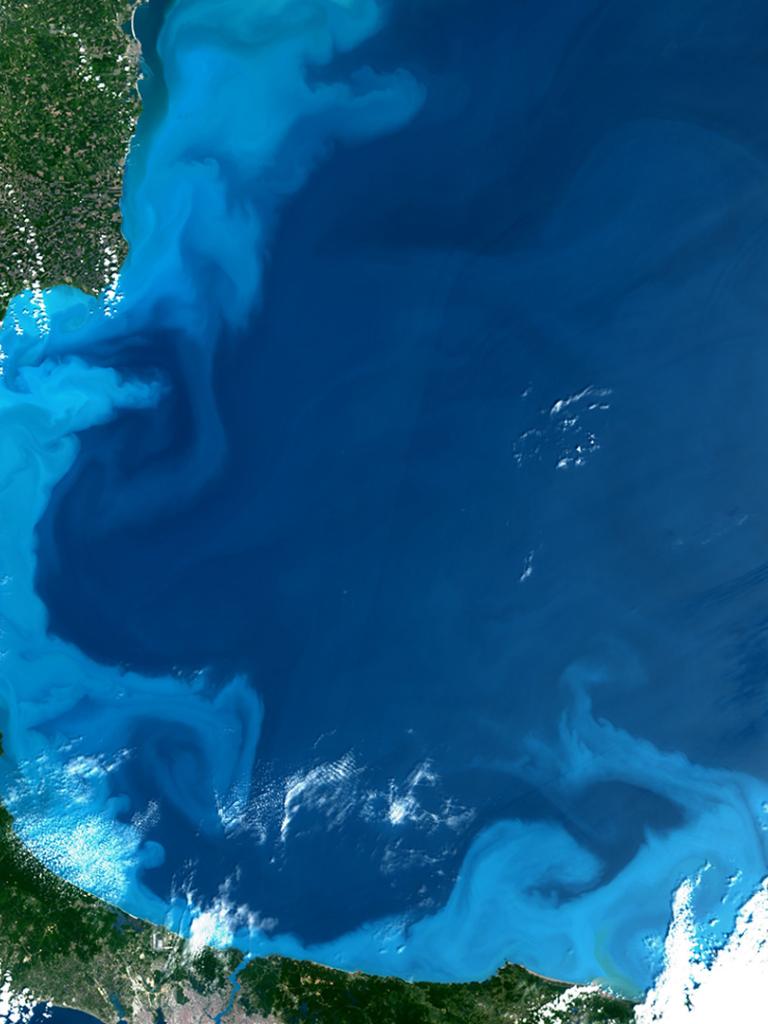
Marine algae bloom in the Black Sea, Sentinel-3, 25 May 2026

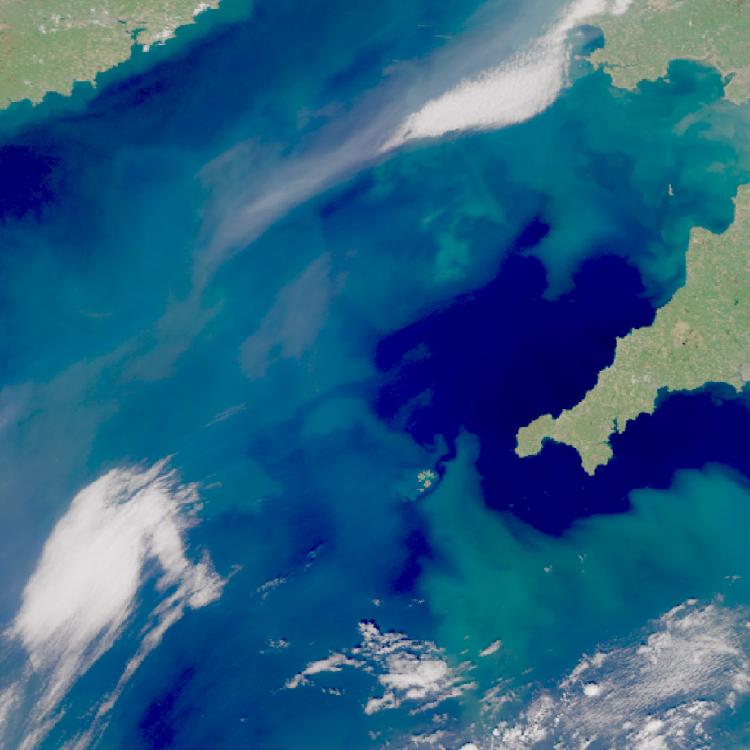
This week’s image shows probable phytoplankton swirls in the southern Black Sea. The image was captured by one of the Copernicus Sentinel-3 satellites on 25 May 2026.

Last Updated

27 May 2026

Published on

27 May 2026

Phytoplankton are microscopic marine algae that form the basis of marine food chains. They also play a key role in sustaining life on Earth as they are responsible for producing over half of the world’s oxygen and they help regulate the climate as they absorb large amounts of carbon dioxide (CO2) from the atmosphere during photosynthesis.

The bloom (cyan colour in the image) is most likely caused by coccolithophores, which are microscopic single-celled plant-like organisms that live in large numbers throughout the upper layers of the ocean. 

These tiny microscopic plants are covered in an armour plating of white chalk plates, which means that when they form massive blooms of billions of coccolithophores they can turn the sea a milky colour and this can sometimes be seen from space.

Marine algae bloom in the Black Sea, Sentinel-3, 25 May 2026

Phytoplankton image

The image was captured by the OLCI instrument onboard one of the Copernicus Sentinel-3 satellites on 25 May 2026.

EUMETSAT operates the Copernicus Sentinel-3 satellites, in cooperation with ESA, and delivers the marine and atmospheric data on behalf of the European Union.

More info

Learn more about how algal blooms are monitored using Copernicus Sentinel-3 and other satellites.

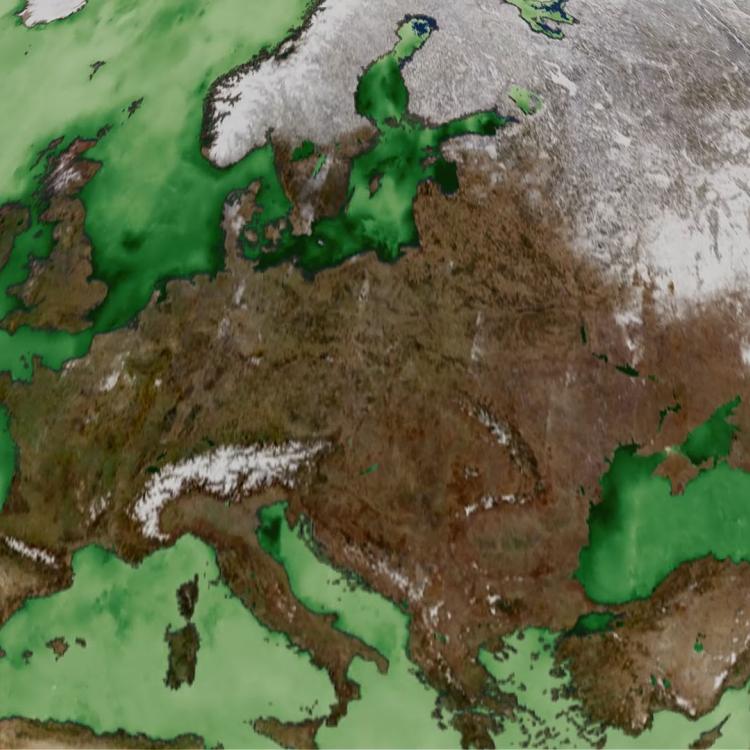
Visualise a whole year of ocean colour data

Visualise Copernicus Sentinel-3 data with EUMETView or Sentinel-2 and -3 data with WEkEO

Access ocean data from EUMETSAT User Portal

A new enhanced RGB product showing phytoplankton etc can be found on EUMETview.