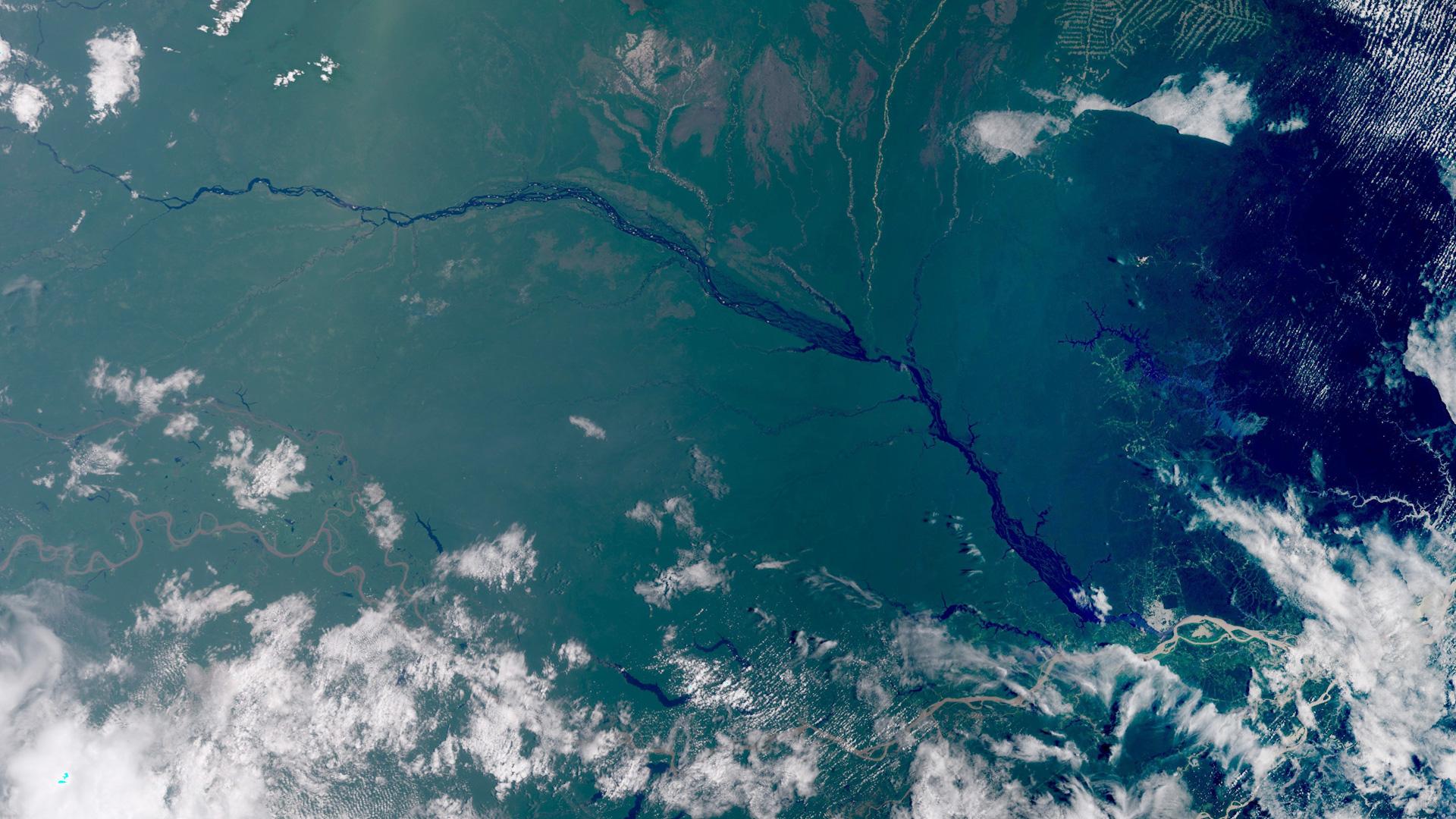
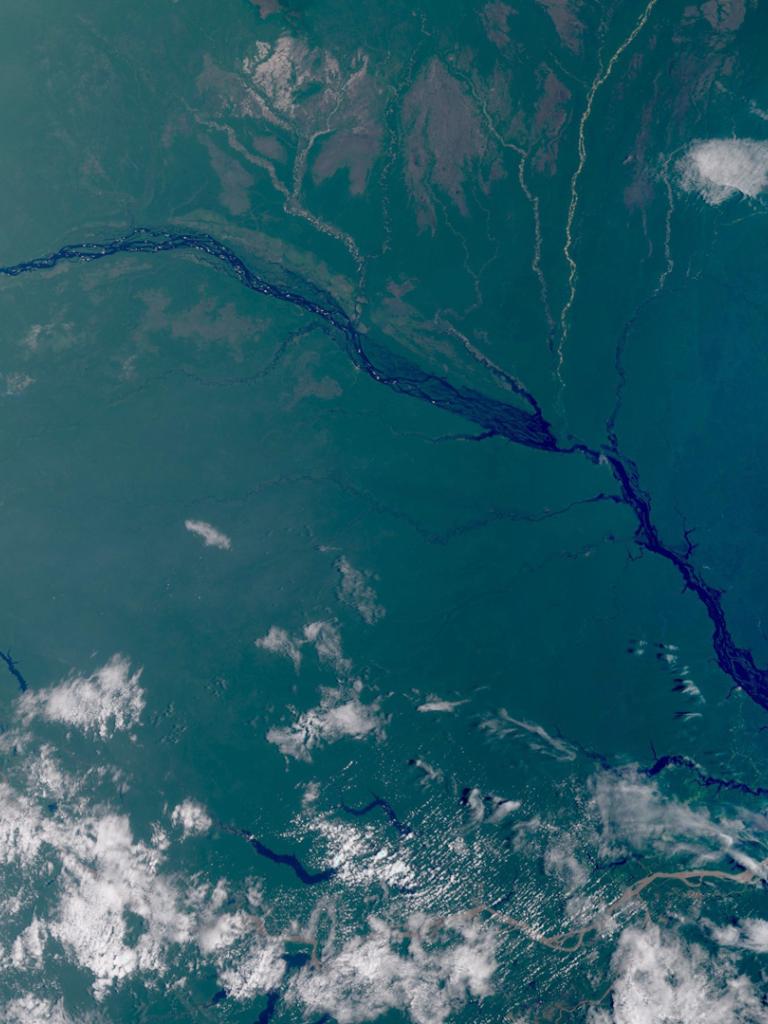
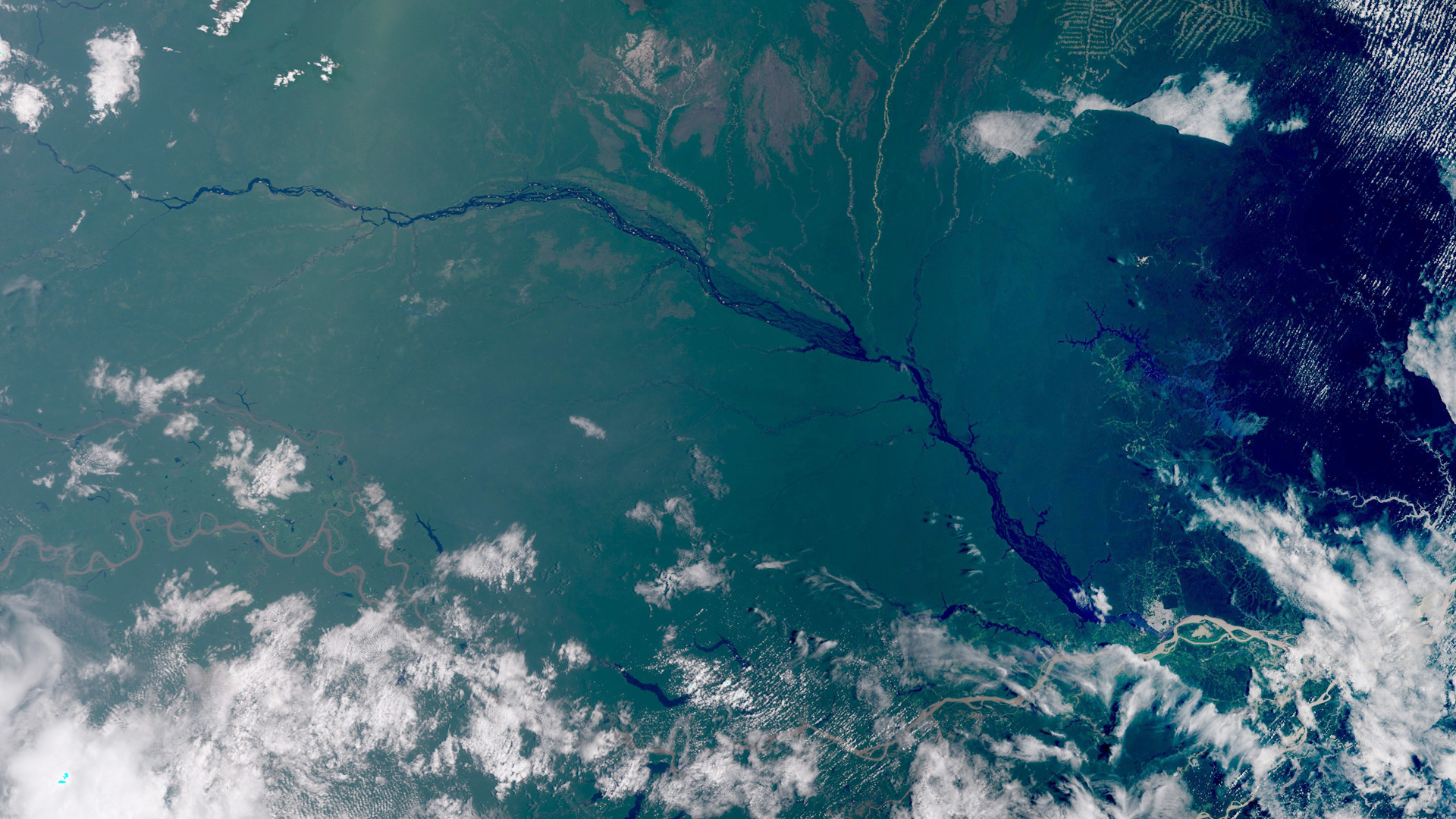
The image highlights the dark-coloured Rio Negro (top) with the sandy-coloured Solimões River (below), at the famous “Meeting of the Waters” east of the city of Manaus - the largest city in the Amazon Basin.
The Rio Negro one of the Amazon’s largest tributaries and famous for its dark waters stained by tannins from decomposing plants. In contrast, the Solimões River is a lighter, sandy colour due to the heavy amount of silt and sediment in the water.
Where the rivers join they flow alongside for several km before they mix, due to differences in temperature, speed and density. From this point on the combined flow is known as the Amazon River.
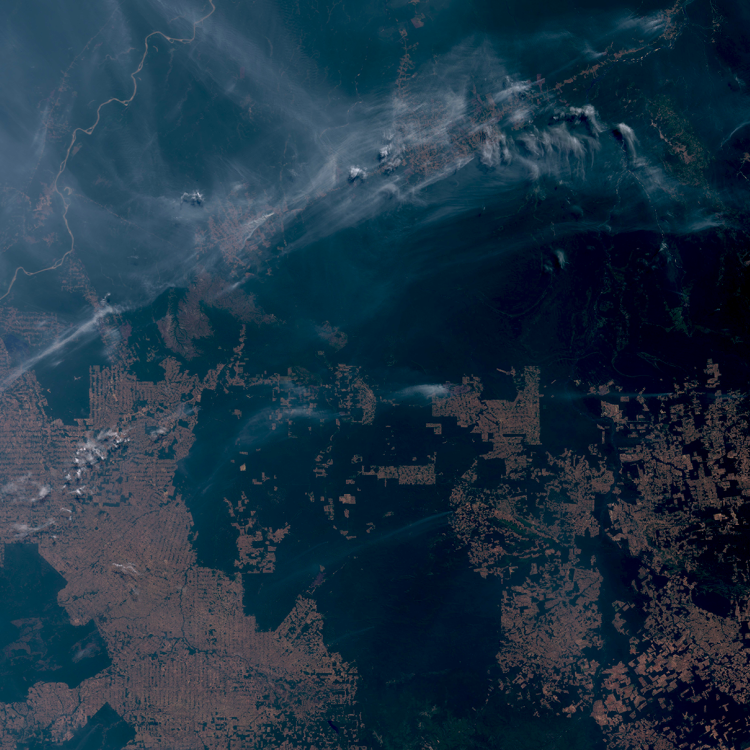
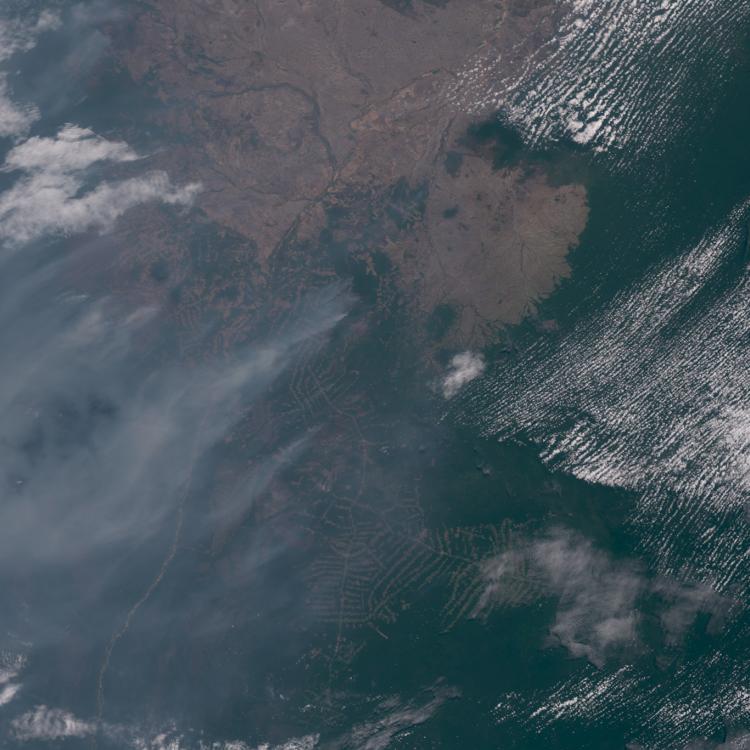
To the top right of the image, “fishbone” patterns are visible which mark areas of human land cultivation and deforestation.
Biodiversity hotspot
The Amazon is one of the Earth’s most vital biodiversity hotspots supporting one in ten known species - from Jaguars and endangered river dolphins to nearly 50000 plant species.
Beyond its wildlife, it is also home to nearly 50 million people and over 400 indigenous groups, representing a massive richness of cultures and languages.
The basin also plays a key role in regulating the global climate by acting as a carbon sink and also by releasing billions of tonnes of moisture every day which influence rainfall patterns across South America and beyond.
Despite its global importance, the Amazon is sadly being degraded by many threats including deforestation, illegal mining, occupation of public lands, forest fires and other activities that impact biodiversity and indigenous communities.